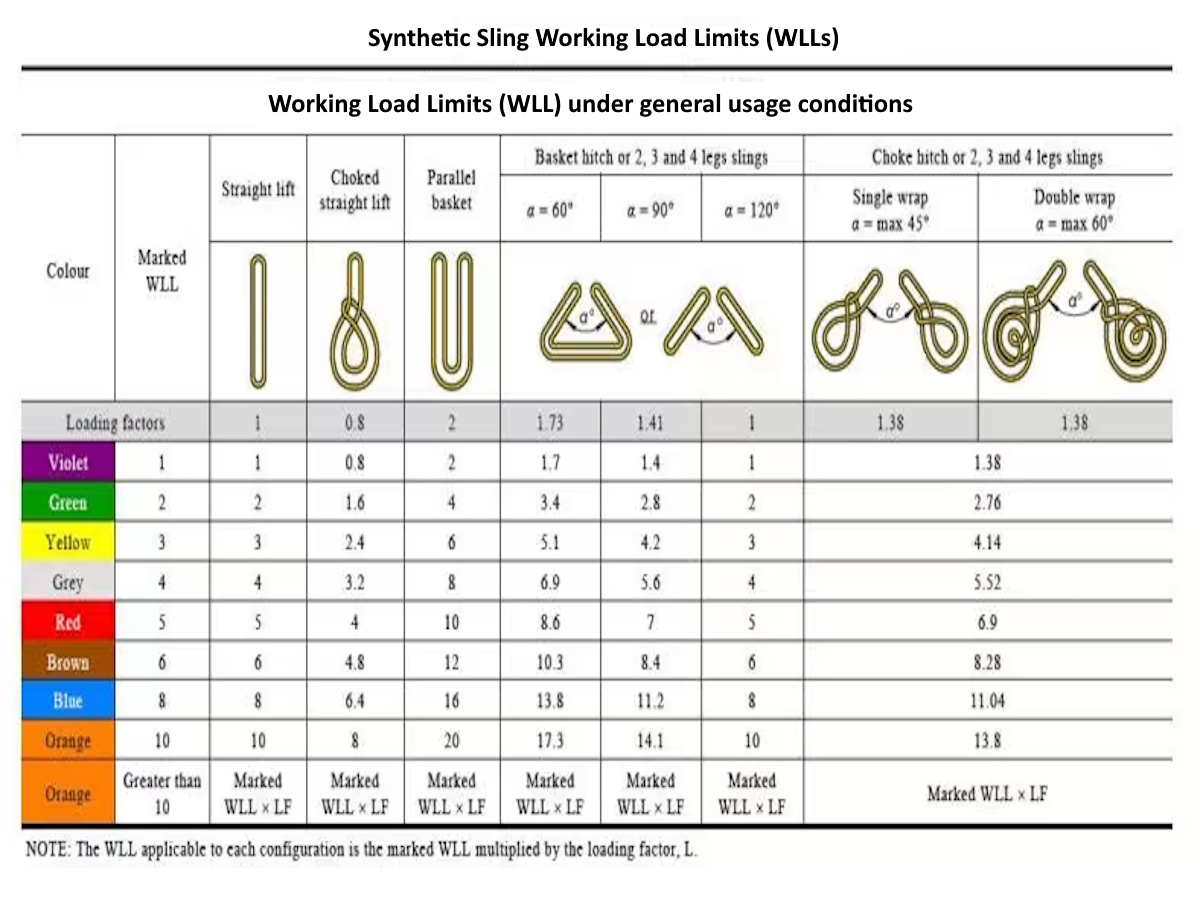
Australian and international standards govern the acceptable use of Synthetic Lifting Slings. Every sling has a working load limit (WLL). This is the maximum weight you can lift in a straight/direct configuration. It must never be exceeded. And for ease of understanding, the Working Load Limit and colour code for synthetic round and flat web slings are matched to the Australian and International standards from 1 tonne to 10 tonne or greater.
Standardized Color Coding (WLL)
To ensure immediate safety verification on job sites, synthetic slings are internationally color-coded by their vertical Working Load Limit (WLL). Reliable rigging suppliers provide a certified product that follows the standard capacities:
🟣 Purple: 1 Tonne
🟢 Green: 2 Tonnes
🟡 Yellow: 3 Tonnes
🟤 Brown: 6 Tonnes
🔵 Blue: 8 Tonnes
🟠 Orange: 10+ Tonnes
Usage Conditions and Realized WLL
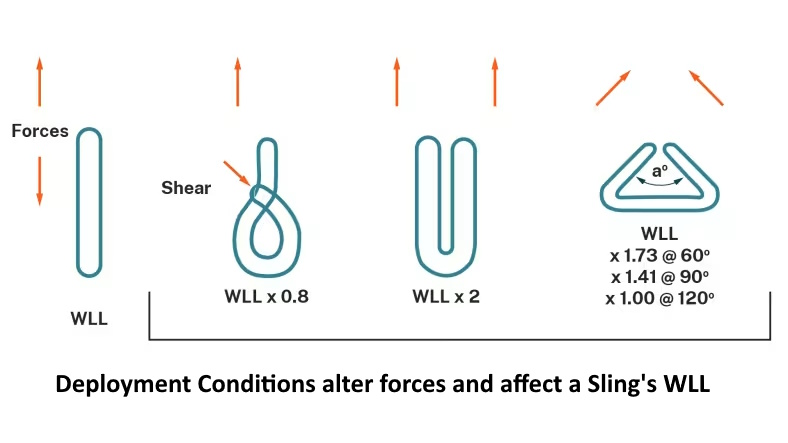
The WLL of a lifting sling may be reduced or increased under certain usage conditions. This effect comes from how forces are applied to the sling based on the configured usage. This applies to all lifting slings made from all materials. This diagram explains what happens to the forces when you change how a synthetic sling is used in common deployment configurations
These common configurations have been ‘named’ and it is critical that the user knows and understands both what the configuration is and how its use affects the realized WLL of a given sling.
These configurations are named:
- Straight Lift
- Choked Straight Lift
- Parallel Basket Lift
- Basket Hitch with Legs (2, 3, or 4)
- Choke Hitch with Legs (2, 3, or 4)
Realized WLL by Configuration
The table below give the multiplication factors (Load Factor LF) by configuration and Marked Sling WLL